March 7, 2026

Praying Mantis Egg Cases Now Available At Wolgast Tree Farm!

Praying mantis egg cases are now available at Wolgast Tree Farm!

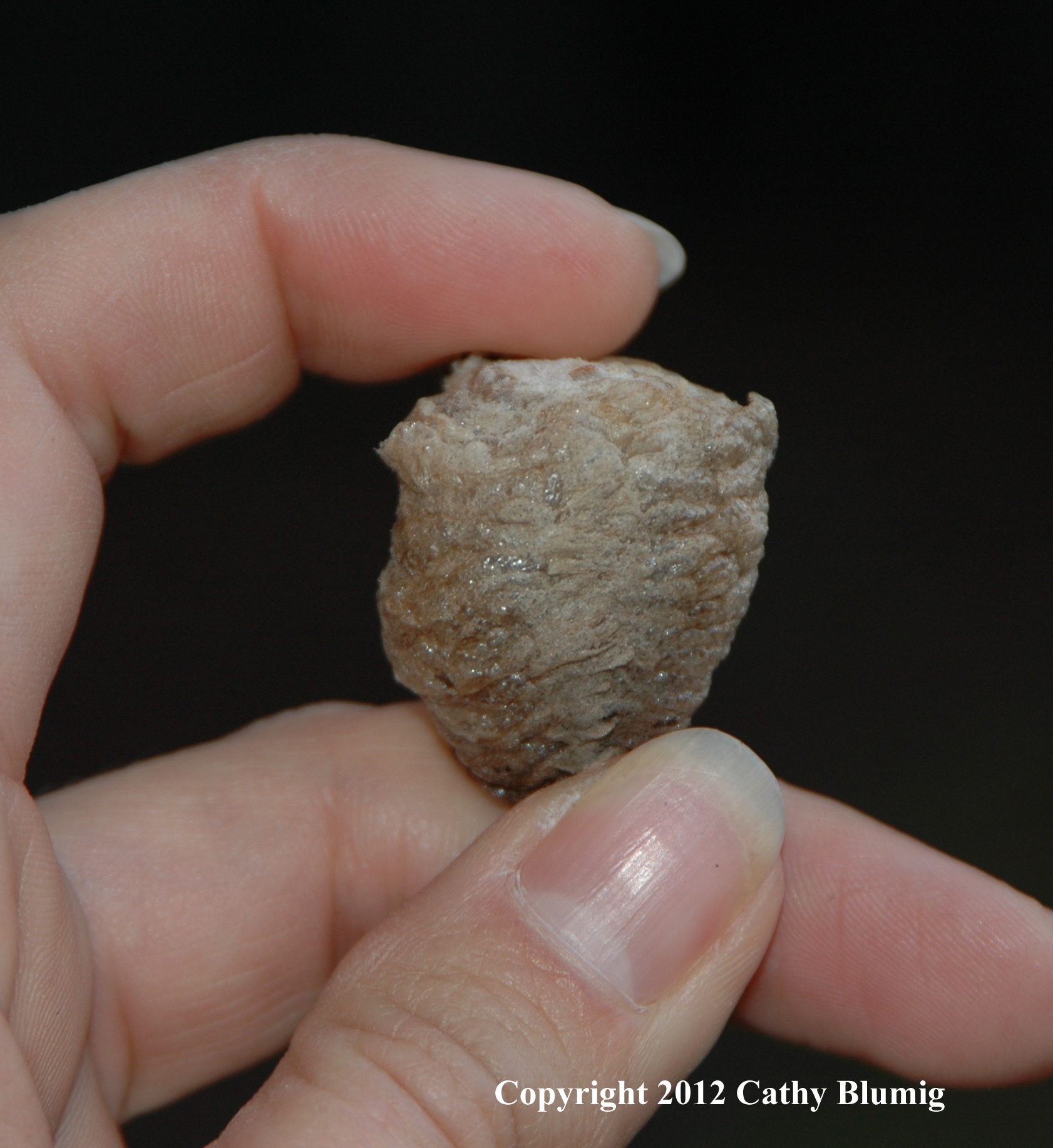
Chinese Praying Mantis Egg Case.
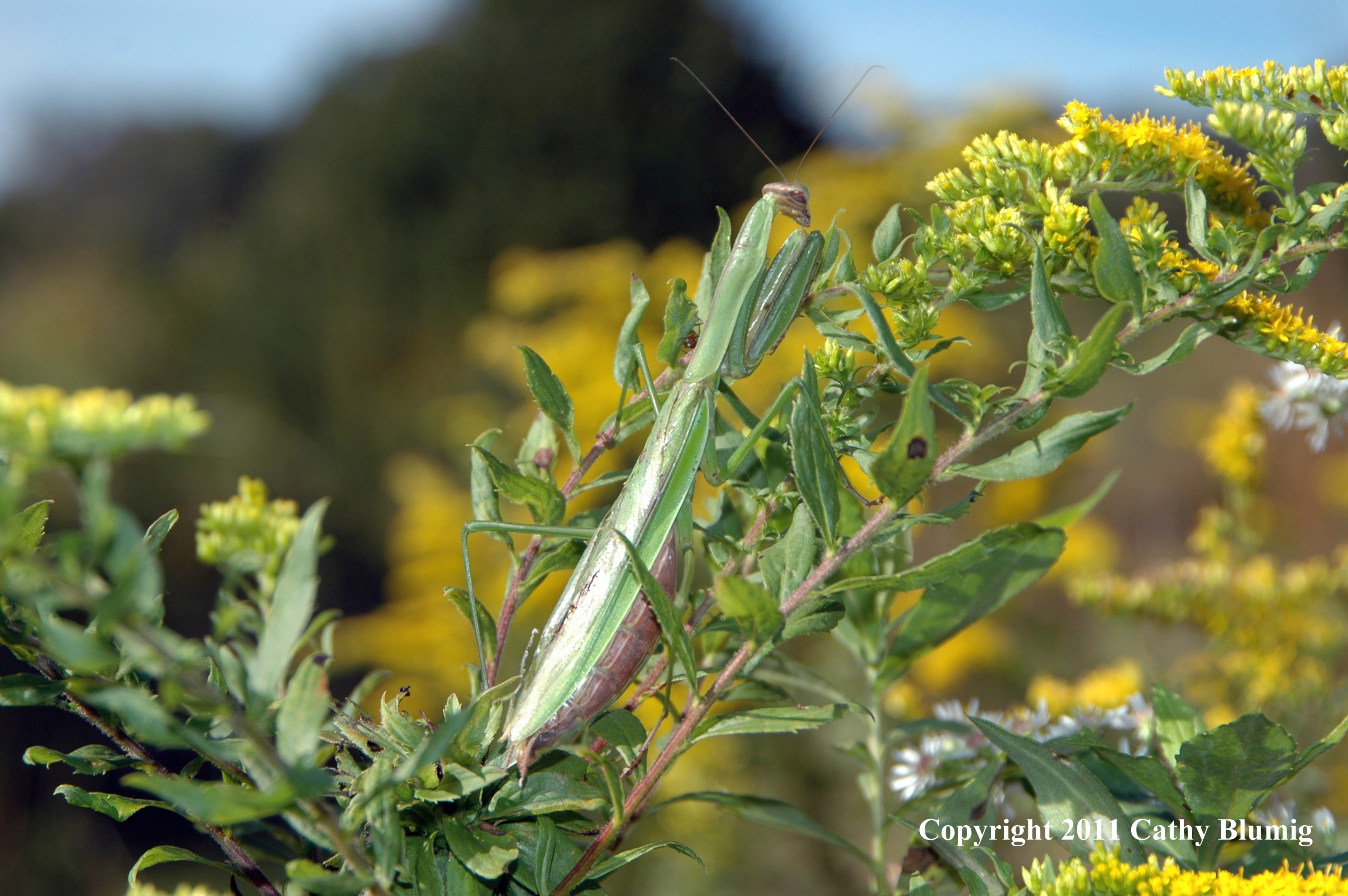
        If you’ve ever been on one of our farm tours during the fall, you’ve likely seen one of the numerous Praying Mantises that call our farm home foraging for insects among our Christmas trees and elsewhere.   We think they are among the coolest-looking, most interesting insects in the world, and now we are offering for sale Praying Mantis egg cases that we collected on our farm. 

A Praying Mantis showcasing its cryptic coloring as it waits to grab its next insect meal.

We have mostly Chinese and European Mantids on our farm, and both species have ravenous appetites.  We’ve seen them snacking on all manner of insects including grasshoppers, wasps, hornets, biting flies and even brown marmorated stink bugs (too bad they don’t only eat stink bugs, because if they did I think they would wipe out the stink bug population on our farm!).  Because Praying Mantises are considered generalist predators they probably don’t have a huge impact on insect pests of Christmas trees, but they definitely eat some and are part of our Integrated Pest Management (IPM) plan for our farm which includes encouraging the presence of beneficial insects.  Beneficial or not, we admire their sleek, cryptic look and we love to see them in our fields.  
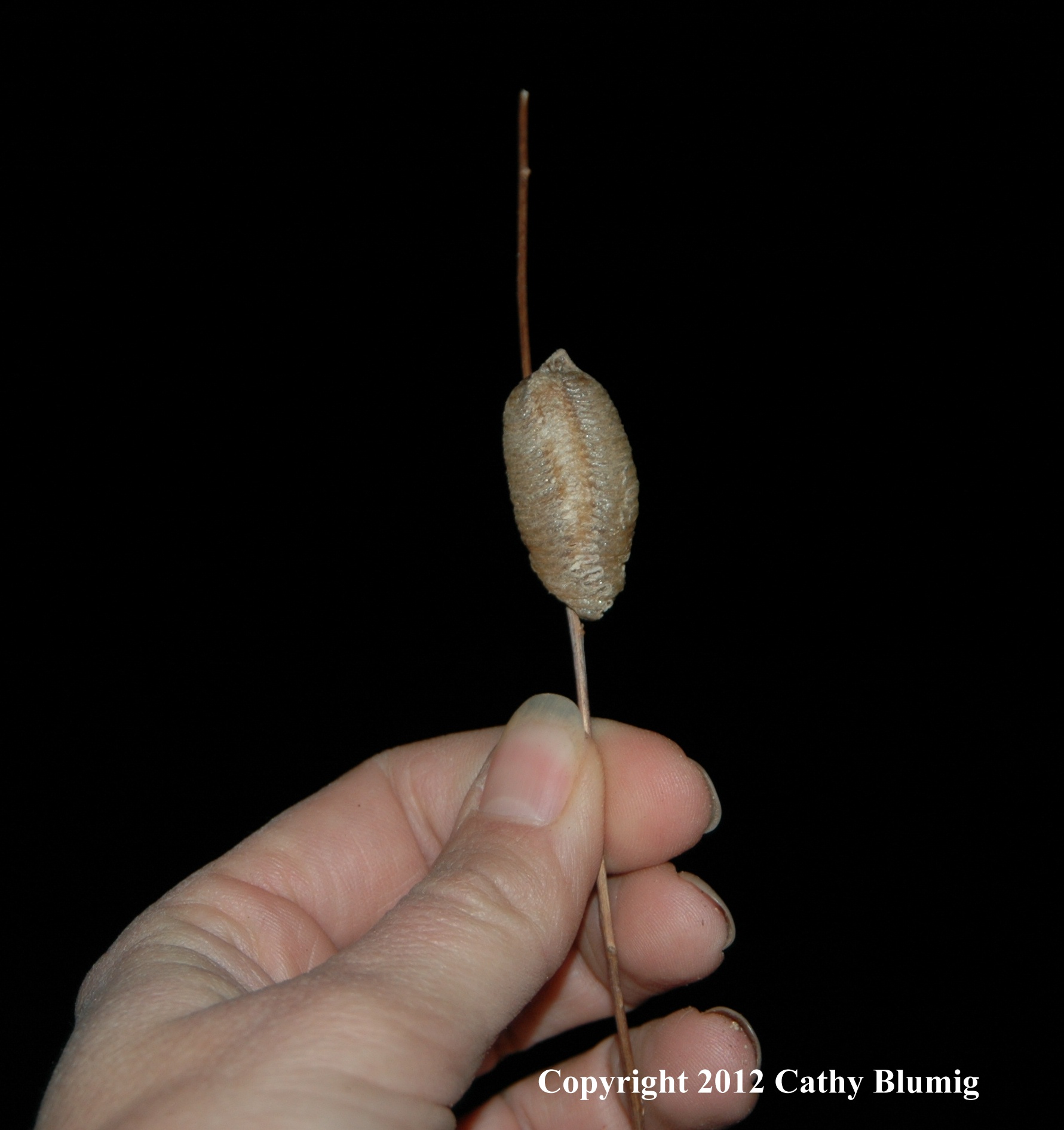
European Praying Mantis Egg Case.

I’ve spoken with gardeners who’ve seen them eat tomato horn worms and other garden pests, which probably explains why so many home gardeners find the Praying Mantis to be an appealing addition to their yards.  It should be noted that their legendary appetite isn’t just limited to pests and if they are hungry enough they will even eat their own kind if given the opportunity.  Talk about a dog-eat-dog-world!

Raising Praying Mantids from an egg case can be an interesting and fun classroom project as well.  To learn more about Praying Mantises, check out this link from the University of Kentucky Cooperative Extension Service:  http://www.ca.uky.edu/entomology/entfacts/entfactpdf/ef418.pdf. We think it provides a nice introduction to this fascinating and beneficial insect.

We have egg cases from both Chinese mantises (Tenodera sinensis) and European mantises (Mantis religiosa), the European egg cases being more limited in supply.  The egg cases were produced on our farm this past fall and cost $3.72 each, plus tax ($4.00 each total) – less than half of what many others are selling them.   Folks who would like to buy a praying mantis egg case (or two, or three, …) are welcome to call and make an appointment for pick-up, or we will mail as many as you’d like as can comfortably fit in a US Postal Service Priority Mail Small Flat Rate Box with some padding for $6.00 in the continental United States.  Because we have no idea how the egg cases will be handled once they leave our possession, we do NOT guarantee  how many praying mantis nymphs will hatch or that they will even hatch at all.   What we will guarantee is that the eggs were  laid in the fall of 2011 and kept in refrigeration after they were gathered.  They will be available for sale between now and mid-April, or while supplies last.  We’re not set up to take credit cards, but we do accept cash (in person) or checks.  Contact info@wolgasttreefarm.com or call 732-873-3206 for more information.  Always include a phone number at which you can be reliably reached with all correspondence.  It helps to move things along.

We like that Praying mantises are part of the scene at Wolgast Tree Farm. They fit right in with the bluebirds, honeybees, snapping turtles, and all the other creatures that call Wolgast Tree Farm home.  Maybe a Praying Mantis or two would be a nice addition to your “back forty,” too!

A Praying Mantis eating an insect on the farm this past fall.
Wolgast Christmas Tree Farm Open For The Holidays!

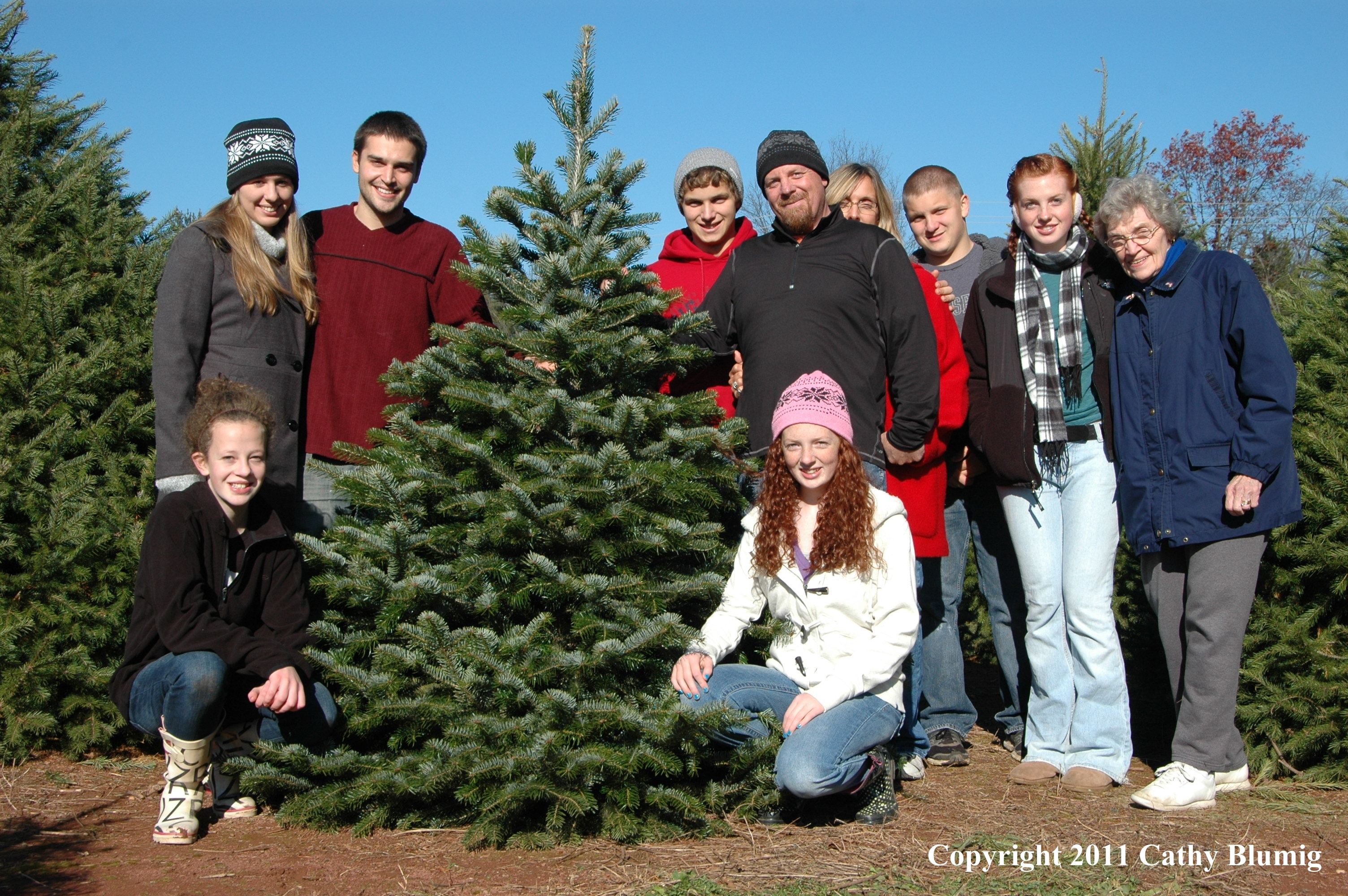
The Huntington Family of Hillsborough were the first visitors to our choose & cut Christmas tree farm this year.

Wolgast Tree Farm officially opened its doors to Christmas tree hunters across central New Jersey and beyond last Saturday, November 26th, but we’ve been so busy making fresh wreaths, grave blankets and meeting with tree customers who made appointments to visit during the week that only now have we had a chance to showcase the first family to get a tree this year:  the Huntington family of Hillsborough! 

The Huntingtons have been coming to our choose and cut Christmas tree

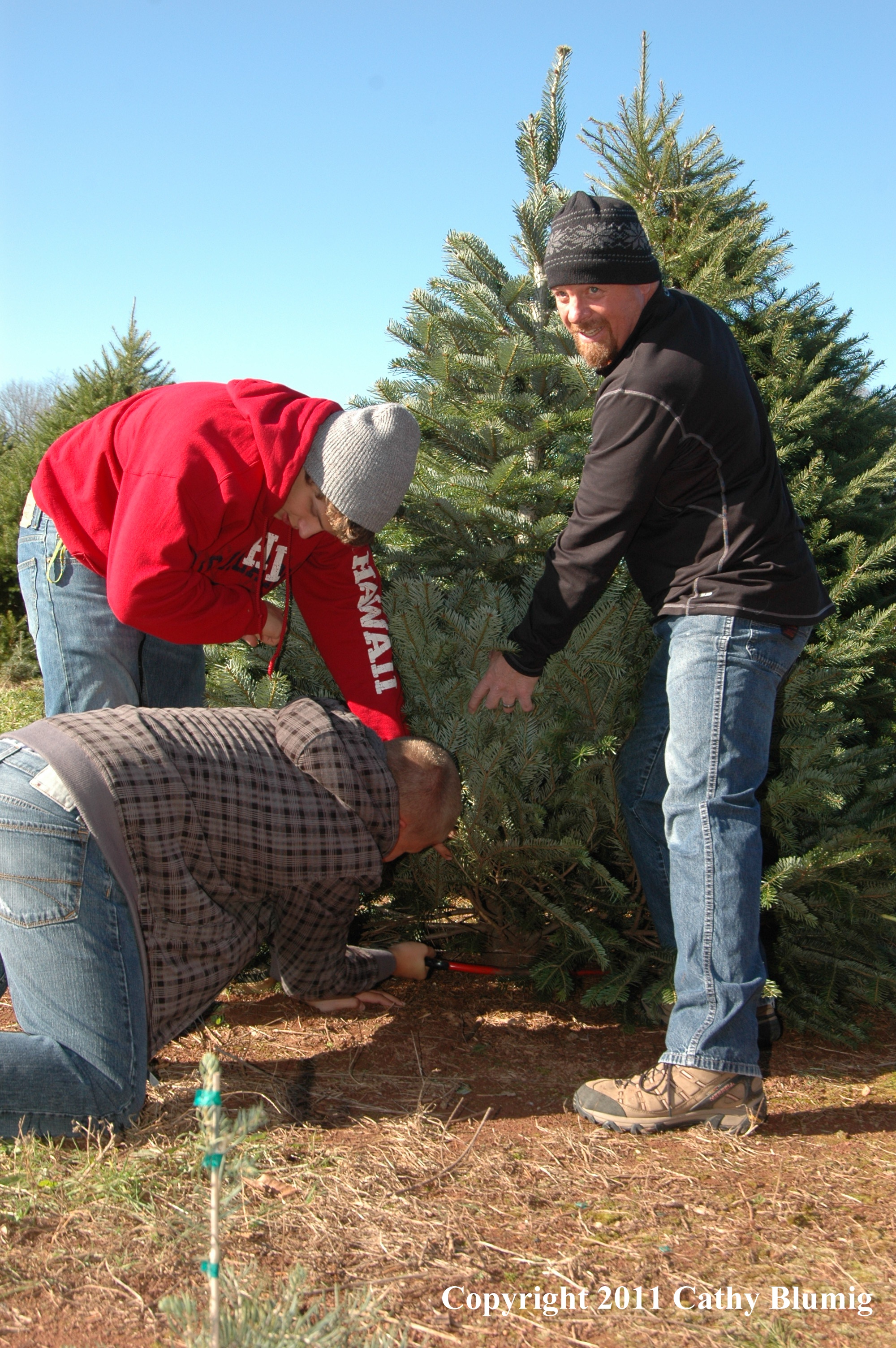
Taking turns holding branches out of the way and cutting the tree with a bow saw at Wolgast Tree Farm.

farm for many years.  They found a lovely Nordmann fir to help celebrate Christmas.  Everyone took turns holding branches out of the way and cutting the tree with the bow saw.  They did a great job!

Although many people like to cut a tree themselves, don’t worry if you’d rather not get down on all fours.  We have helpers who are happy to do the cutting for you and help get the tree to your car.

Whether you cut your tree or one of our helpers does, wear clothes and footwear that you don’t mind getting dirty, especially if its wet out. 

And here’s another important tip: most ceilings are 8-feet high, so your tree should probably be between 6 and a half,  to 7 – feet tall if you want it to go floor to ceiling and still be able to accommodate a tree topper and a stand.  For some reason Christmas trees look much smaller in the field than they do once they are brought into your house.  Remember, you don’t have to take the entire tree.  We’re happy to cut it to size so it will fit in your house.

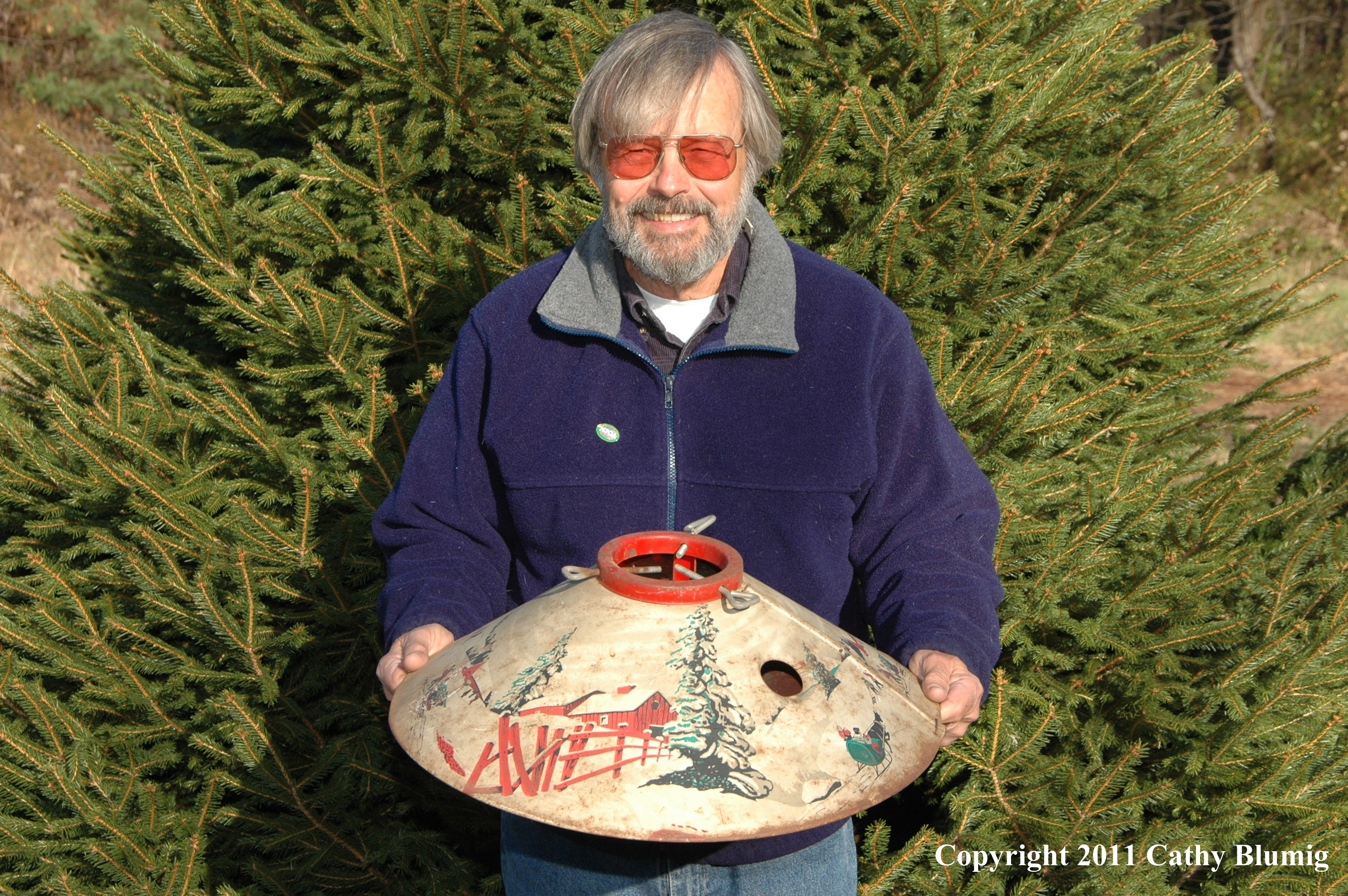
The Christmas tree stand that Len used when he was a kid!

And speaking of Christmas tree stands, take a look at this tree stand we found hidden in the rafters of our outbuilding.  It’s the Christmas tree stand Len used when he was a kid!  We looked for a manufacturer’s name on the stand but couldn’t find one.  It’s at least sixty years old and charming to beat the band, but from the looks of it not as easy to use as the Superior Tree Stands we have at the farm.  Many people who have bought the Superior tree stands have said it prevented many family arguments it was so easy to use.  They liked the large water reservoir too, to help keep their tree fresh.

Between discovering Len’s antique tree stand and seeing the return of so many farm visitors who have been coming to us for years, we’re really in the holiday spirit at Wolgast Tree Farm!

Phillipsburg High School FFA Visits Central Jersey’s Wolgast Tree Farm

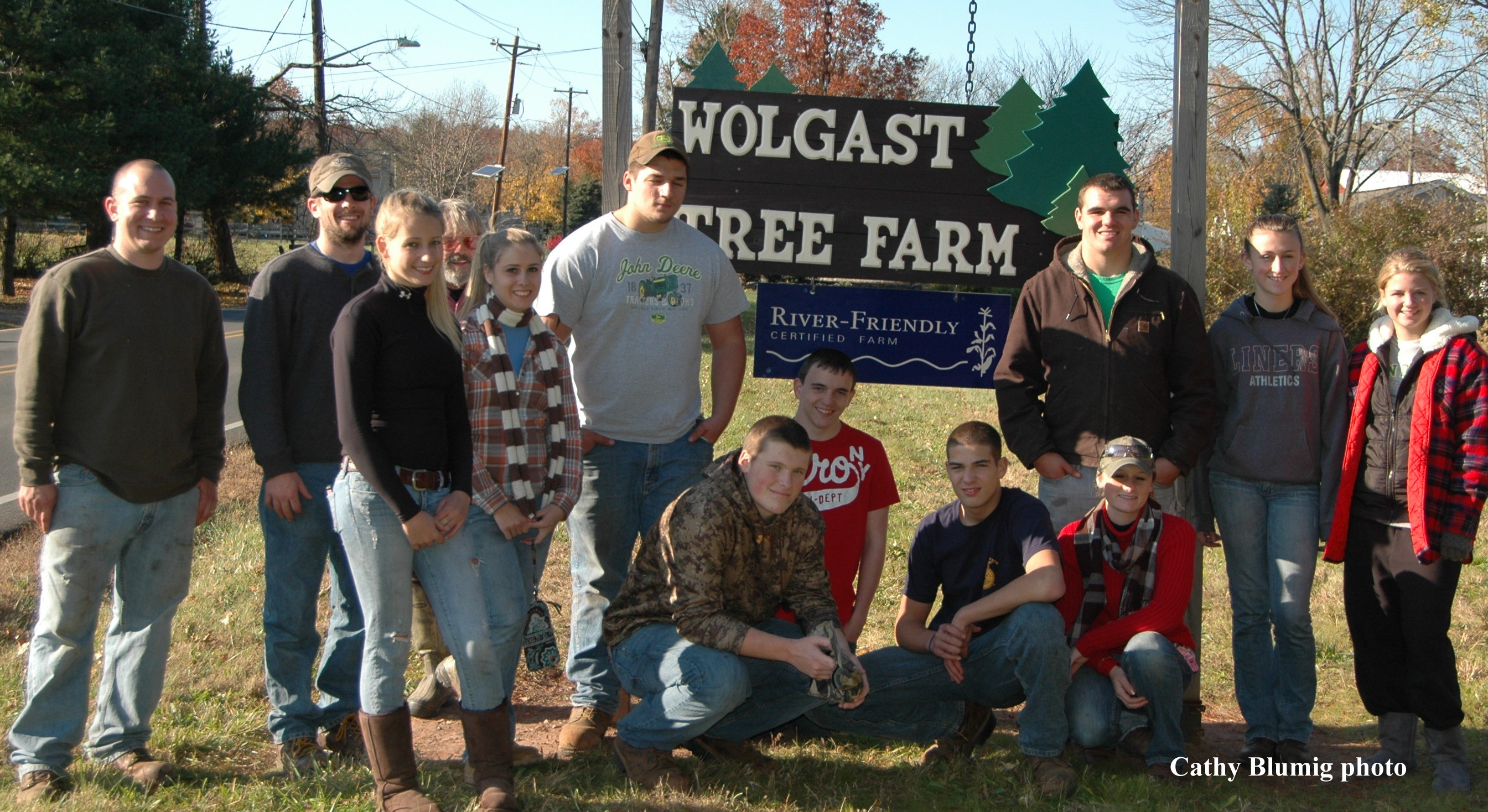
Members of Phillipsburg High School's FFA Chapter visited Wolgast Tree Farm last Saturday.

Members of the Phillipsburg High School FFA chapter (Future Farmers of America) traveled from their haunts in Warren County to visit central New Jersey’s Wolgast Tree Farm in Somerset last Saturday.  This was the  third year that Phillipsburg FFA has visited our farm to get trees they will use to make grave blankets, and we consider it one of the highlights of the year when they do.  They are enthusiastic, hard-working, and well-mannered kids, and they instill a lot of hope within us about the future and character of today’s young people.  That they have an interest in agriculture and the outdoors is even better!

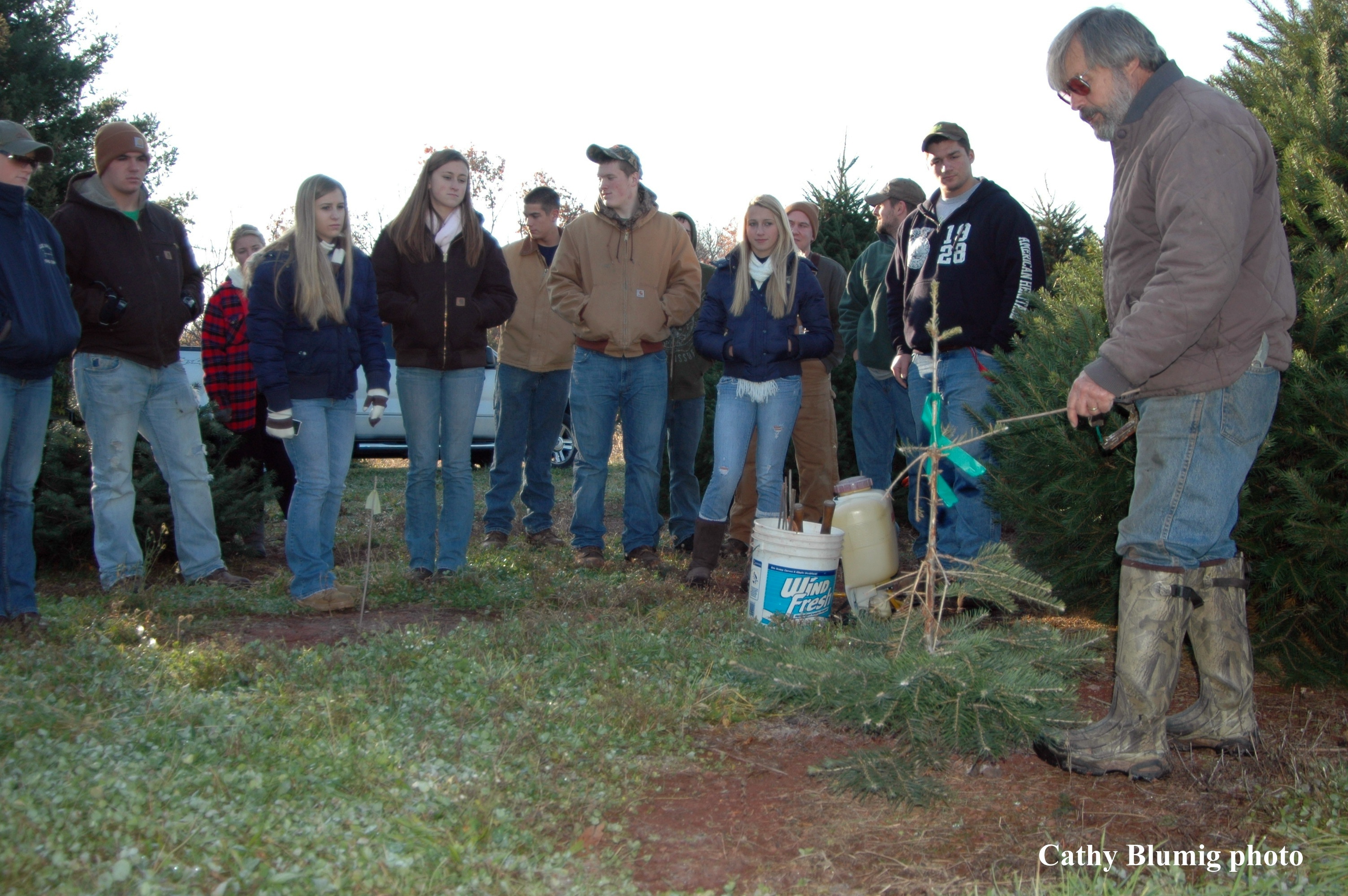
Before they headed out to the fields to cut trees, the students got a short tour, “A Year in the Life of a

Len shows members of Phillipsburg High School FFA what bucks can do to Christmas trees with their antlers (make a "buck rub") and how we try to prevent the damage by spraying the trees with deer repellent. This didn't work as well as it might have this year because we had lots of rain that washed the repellent off.

 Christmas Tree Farmer.”  Len discussed how we plant seedlings, control weeds and insect pests, and shear Christmas trees, as well as prevent and correct damage to trees caused by male white-tailed deer.    The chapter was invited to return in the spring to get a more detailed tour that would cover how we use Integrated Pest Management (IMP) on our farm, why our farm has been certified as being “River-Friendly,” and how we’ve integrated wildlife management into our operation to enhance the kinds of wildlife that visit, while aiming to minimize wildlife-caused damage.

 After the tour, everyone rolled up their sleeves and set about to cut 25 Douglas firs, the greens from which the students will use to make grave blankets to sell as a fund-raiser. 

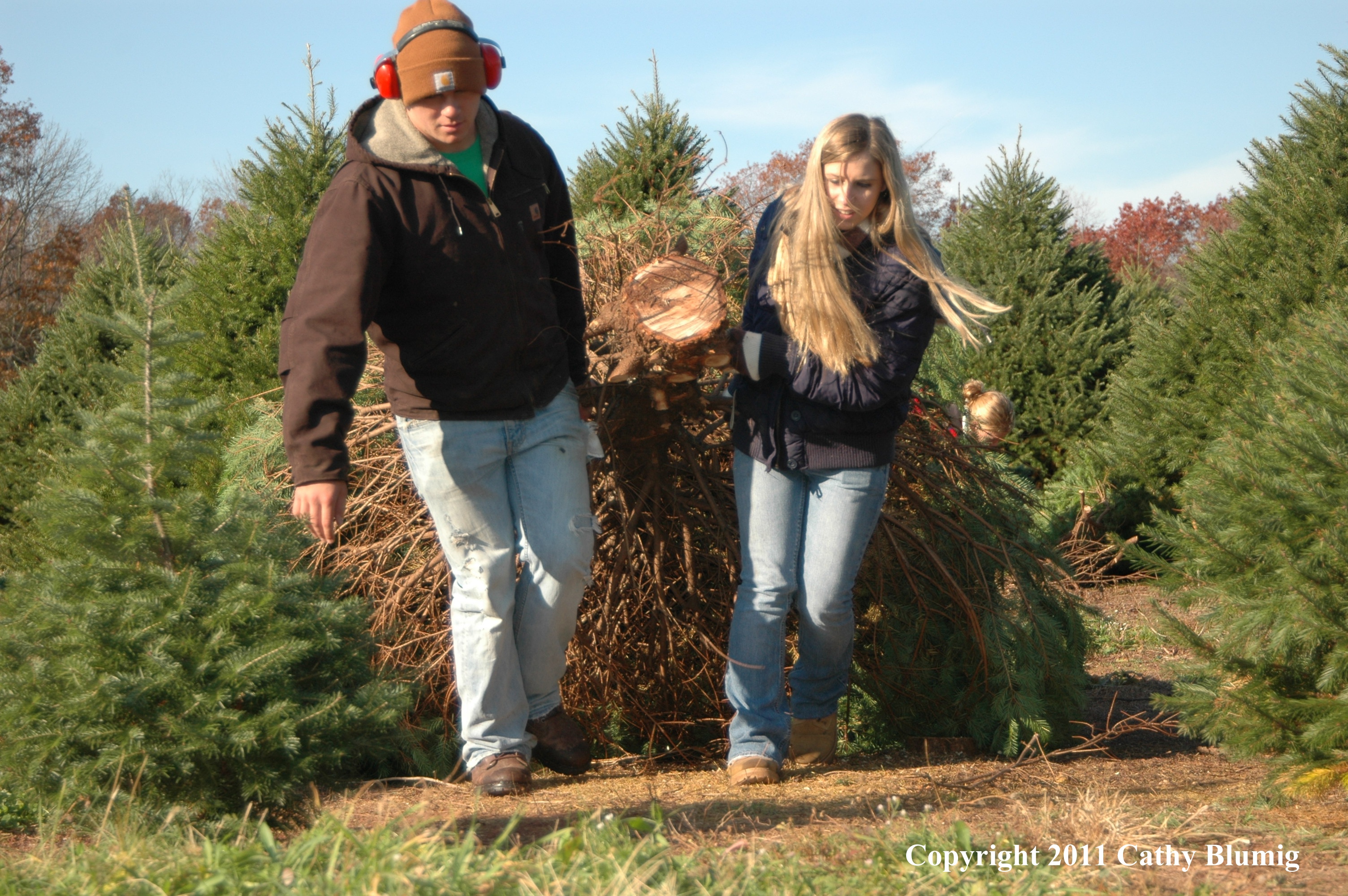
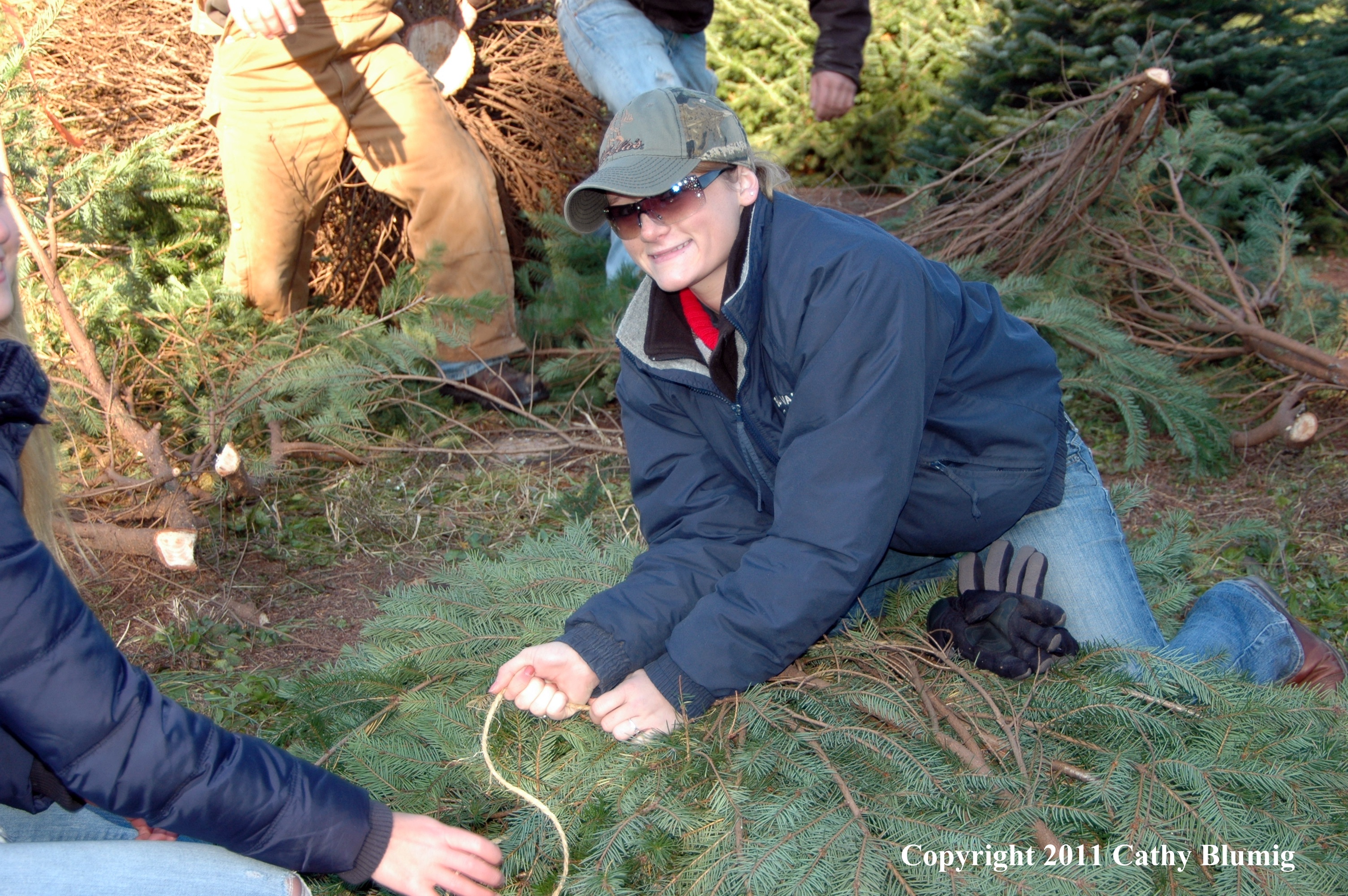
Phillipsburg High School FFA members hauling a Douglas fir out of the field.

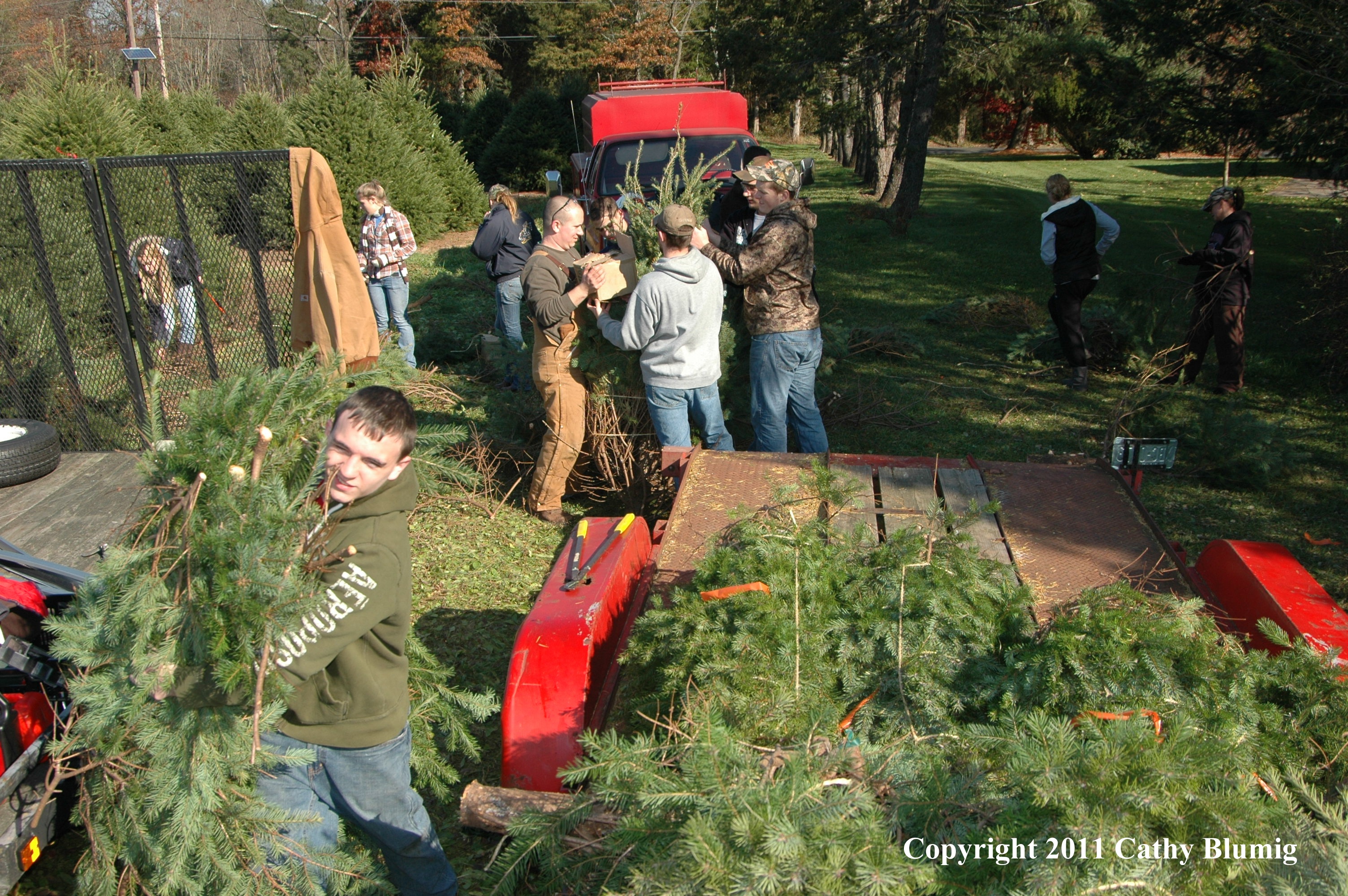
It was a big job.  The trees were cut, hauled out of the fields, and the branches were removed from the trunks.  The branches were tied into small bundles, and loaded on to trucks and a trailer, and brought back to school.  What made the task especially demanding was that the trees were very big. 

Bundling Douglas fir greens that Phillipsburg High School FFA members will use to make grave blankets that they will sell as part of their annual fund raiser.

Some of the trees were close to 200 pounds each!  They had grown so large and heavy because some had double and triple trunks and weren’t suitable to be Christmas trees so they kept growing over the years. Rather than throw the trees away, they are used in other ways.  The greens from these trees are beautiful, and we have been using them to make  grave blankets and wreaths on our farm, and marketing them for the same purpose to others, like Phillipsburg FFA.

The crew of the Phillipsburg FFA bundling & loading Douglas fir greens from Wolgast Tree Farm in Somerset, NJ.

Despite being physically demanding, it was a fun day.  The students have said their visit to our farm is among their most favorite activities of the year.  From our end, we appreciate  their interest in our trees, but even more we enjoy sharing our interest in agriculture and the outdoors with others, and the opportunity to see young, industrious people in action.  It’s always a delight to have Phillipsburg High School FFA Chapter visit Wolgast Tree Farm!

Of Bears and Bees and Electric Fences at Wolgast Tree Farm

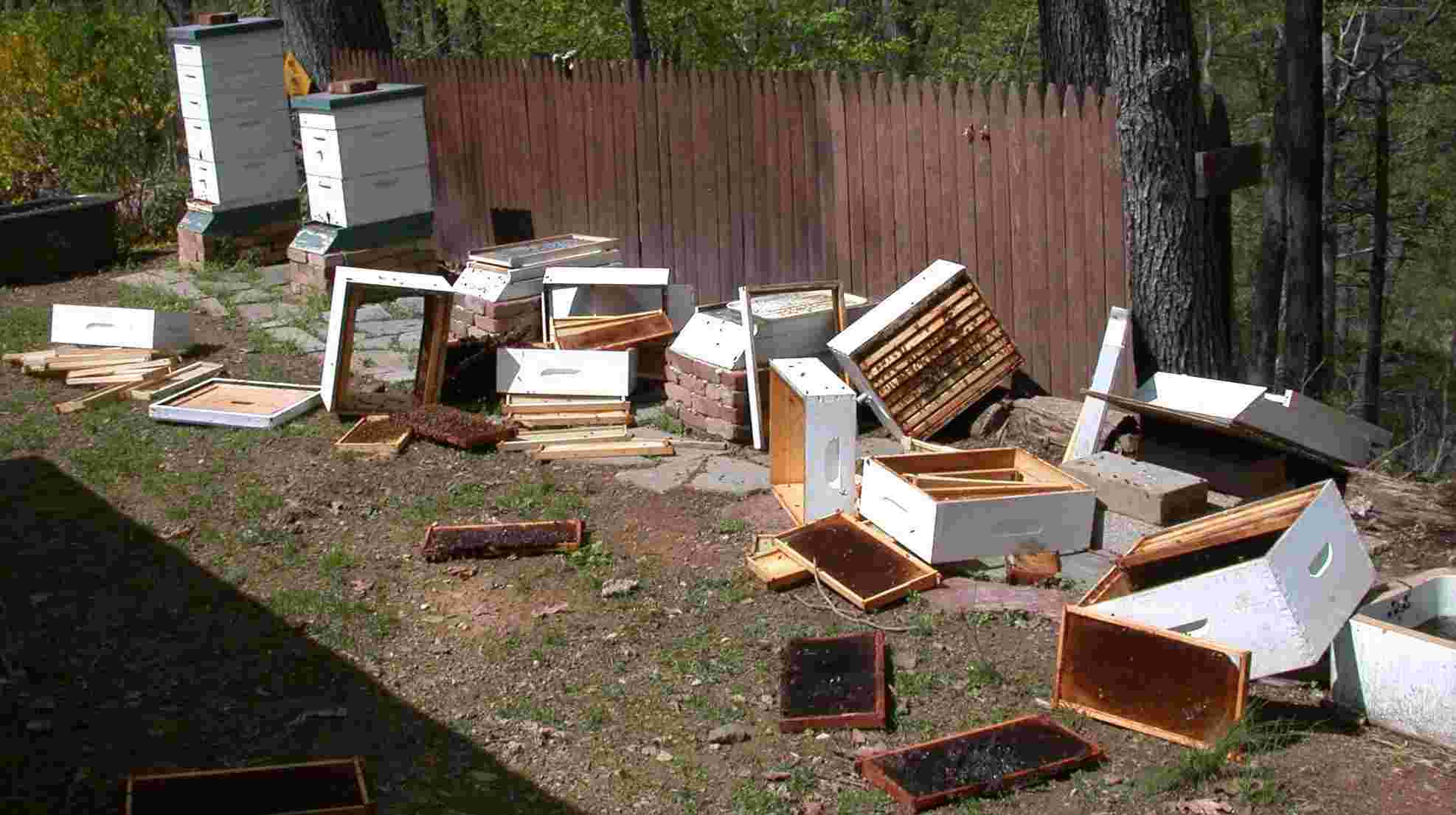
This is not a photo of beehives in Joplin, Missouri or even beehives at Wolgast Tree Farm.   This photo was taken in nearby Bridgewater in central New Jersey after a bear destroyed an apiary. 

Most people don’t think of Bridgewater as someplace where you’d need to watch your “Ps” and “Qs” concerning bears, but bear sightings have been increasing across central New Jersey, so it’s important for everyone to learn how to minimize  conflicts with bears.

Bears can be attracted to apiaries for both honey and bee brood (baby bees still in the comb).  It has been estimated that damage by a bear to an apiary can cost $400 per hive.  It’s also emotionally upsetting for the beekeeper, and the bees don’t like it either.

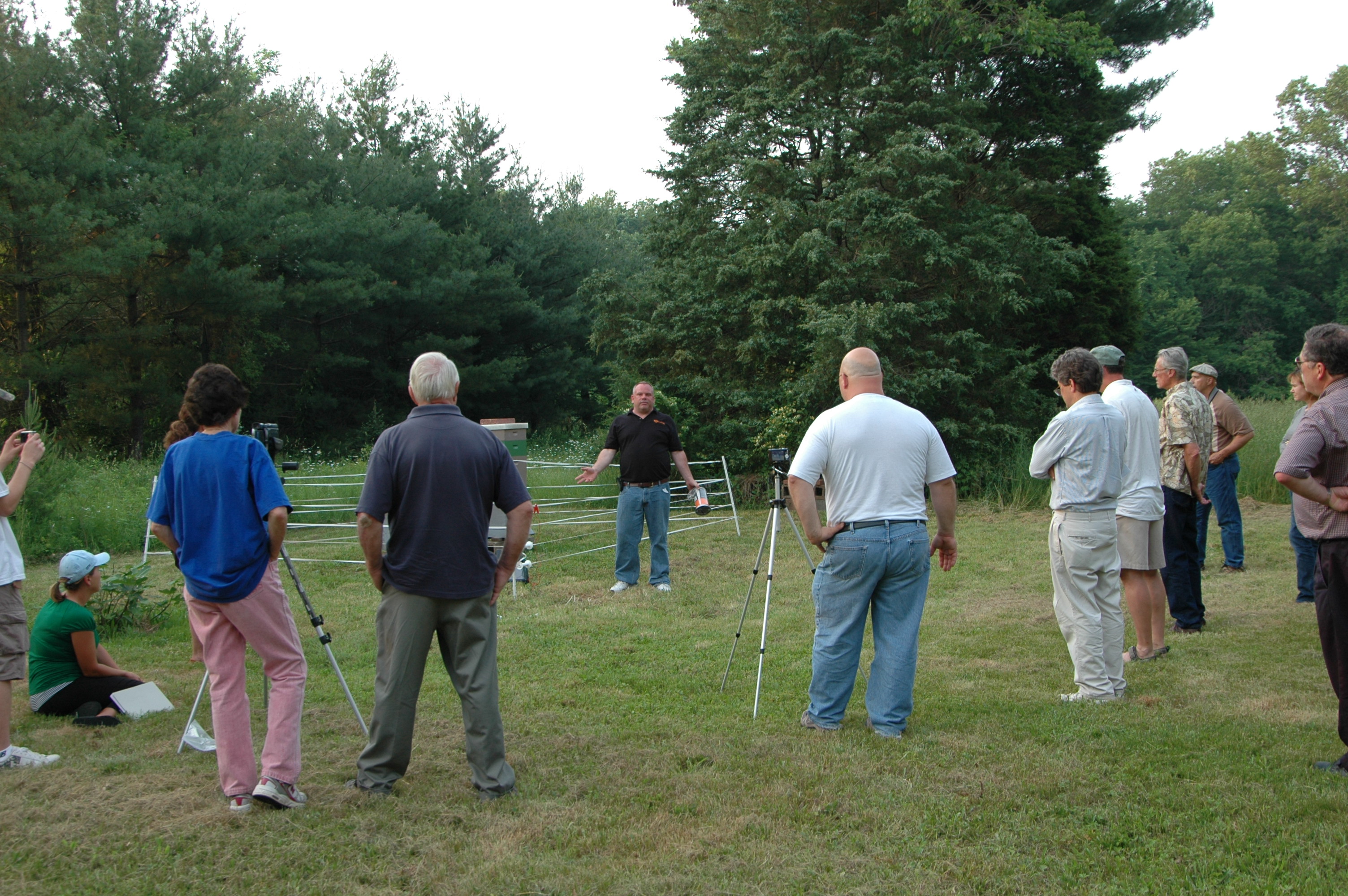
An effective means of minimizing bear damage to beehives is by surrounding them with an electric fence, so earlier this month, Wolgast Tree Farm hosted a free electric fencing clinic for beekeepers. 

Greg Miller from Gallagher Fence Company gave the clinic and explained how electric fences work, how to set them up, and how to maintain them so that they’ll actually deter a bear if one attempts to get at a hive.  Handouts were also given that outlined common problems that personnel from the New Jersey Division of Fish and Wildlife have encountered when apiaries with electric fencing failed to stop bears from destroying hives. 

 All kinds of beekeepers came out to the farm and it was a delight to meet everyone.  Hopefully, the information provided at the clinic will keep everyone’s apiary “Bear-Free”. 

The New Jersey Division of Fish and Wildlife offers a plethora of information on how to minimize conflicts with bears under a variety of circumstances (not just for beekeeping), as well as information about black bear history in New Jersey,  their biology, behavior, and more.  Visit:   http://www.njfishandwildlife.com/bearfacts.htm  to get the lowdown on these intriguing and powerful creatures of the Garden State.

Hello From Wolgast Tree Farm!

Hello to all of our friends and family – we’re so happy you came to visit our site!

Check back often to see what’s new and come on out to visit us here at the farm!

Cathy & Len Wolgast